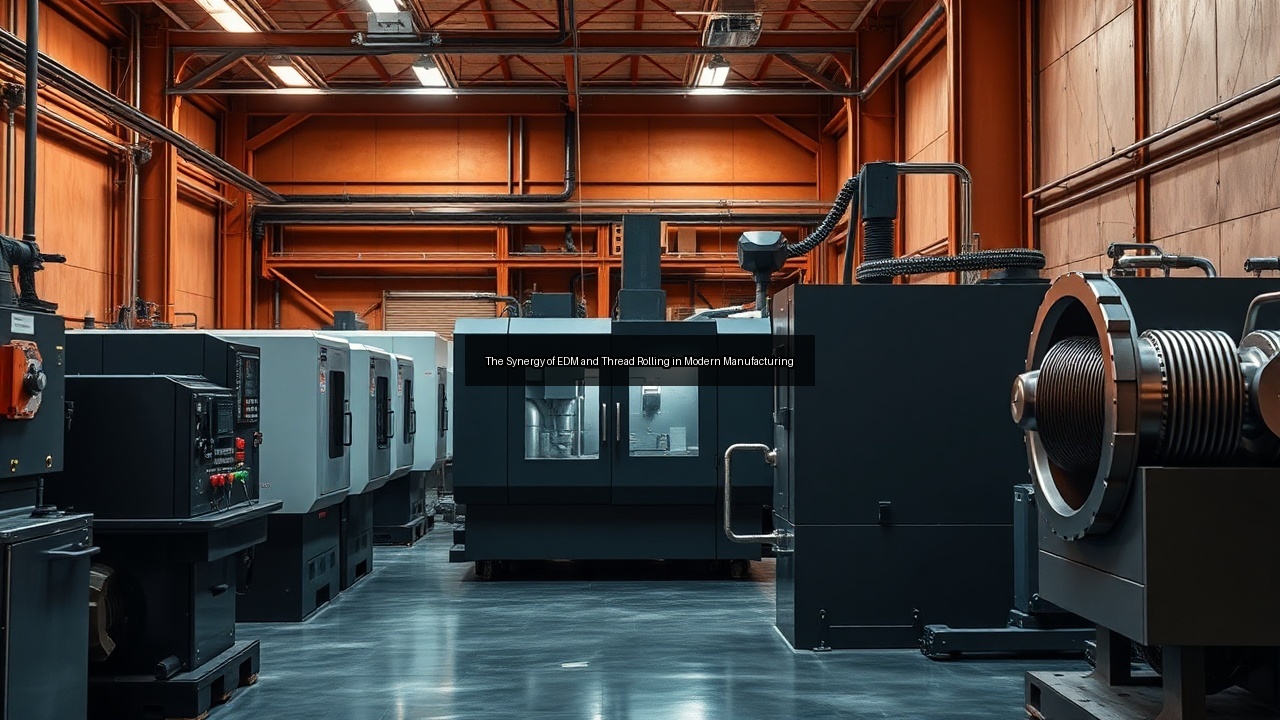
The Synergy of EDM and Thread Rolling in Modern Manufacturing
Understanding Thread Rolling and Its Applications
Overview of Thread Rolling Technology
Thread rolling stands as a vital technique in modern manufacturing, particularly for creating strong, precise threads on metal fasteners. This cold-forming process uses cylindrical dies to generate threads on a workpiece without removing material. Instead of cutting, thread rolling displaces metal, which enhances the strength of the threads by improving the grain structure. Manufacturers prefer thread rolling for its efficiency and ability to produce high-quality threads quickly. This method provides dimensions that are consistent, offering tighter tolerances compared to traditional machining methods. Moreover, the process can accommodate a variety of materials, including steel, aluminum, and brass, making it versatile for many applications.
Importance of Thread Rolling in Manufacturing
Thread rolling plays a crucial role in the manufacturing landscape by producing durable and reliable fasteners. Industries that rely heavily on threaded components, such as automotive, aerospace, and oil and gas, benefit immensely from this technology. The ability to create threads that can withstand extreme conditions and loads ensures the safety and functionality of various products. Thread rolling also reduces material waste and lowers production costs, providing manufacturers with a competitive advantage. By optimizing the thread rolling process, companies can enhance productivity while ensuring quality, which is essential in a market where precision and reliability are paramount.
Key Industries Utilizing Thread Rolling Services
Several key industries utilize thread rolling services due to their need for high-strength fasteners. The aerospace sector demands precision-engineered components that can endure harsh environments, making thread rolling indispensable. Similarly, the oil and gas industry requires robust fasteners that can handle high pressures and temperatures, which thread rolling can efficiently produce. Additionally, the military relies on thread rolling for manufacturing components that must meet stringent safety and performance standards. Other industries, such as construction and electronics, also leverage thread rolling for various applications, illustrating the method's widespread relevance across multiple sectors.
The Role of EDM in Enhancing Thread Rolling Processes
Introduction to EDM Machining
Electrical Discharge Machining (EDM) is a non-traditional machining process that uses electrical discharges to remove material from a workpiece. This precise technique excels at creating intricate shapes and contours, making it a valuable complement to thread rolling services. EDM is particularly effective for machining hard metals that are challenging to cut through conventional methods. By utilizing this technology, manufacturers can achieve higher precision in their components, which is critical in industries where accuracy is paramount. The integration of EDM with thread rolling enhances the overall manufacturing process, allowing for superior thread quality and performance.
Benefits of Integrating EDM with Thread Rolling
Integrating EDM with thread rolling brings numerous advantages, particularly in terms of efficiency and quality. This synergy allows for the production of complex threaded parts that require additional features, such as knurling or unique geometries, which traditional methods may struggle to achieve. EDM can be employed to fine-tune the dimensions of threaded components after they have undergone the thread rolling process. This combination ensures that manufacturers can meet tight specifications while maintaining high production rates. Additionally, using EDM reduces the need for secondary operations, streamlining the workflow and minimizing costs associated with additional machining steps.
EDM vs. Traditional Machining Methods
Comparing EDM to traditional machining methods highlights significant differences in capabilities and applications. While traditional methods rely on cutting tools to remove material, EDM uses controlled electrical discharges, allowing for precision in hard-to-machine materials. This advantage makes EDM particularly useful for industries that demand intricate designs and superior accuracy, such as aerospace and military manufacturing. Traditional machining methods may require extensive tooling and setup time, while EDM can quickly adapt to different designs, reducing lead times. The combination of EDM with thread rolling not only enhances the quality of threaded components but also increases overall efficiency in the manufacturing process.
Innovations in Thread Rolling Services for Modern Manufacturing
Advancements in CNC and Swiss Screw Machining
Recent advancements in CNC and Swiss screw machining have revolutionized thread rolling services. CNC technology allows for precise control over the machining process, enabling manufacturers to produce complex threads with high accuracy. Swiss screw machining, known for its ability to create small, intricate components, complements thread rolling by providing exceptional surface finishes and tolerances. These technologies enable manufacturers to respond to evolving demands in various industries, delivering high-quality threaded components tailored to specific applications. As a result, manufacturers can optimize their production processes, reduce waste, and maintain competitive pricing.
The Impact of Technology on Fastener Production
The integration of advanced technologies in fastener production, particularly thread rolling, has transformed manufacturing capabilities. Automation and robotics streamline the process, increasing speed and precision while reducing labor costs. Enhanced software for design and simulation allows manufacturers to prototype and test threaded components digitally before physical production. This capability minimizes errors and leads to better planning and resource allocation. Additionally, smart manufacturing techniques, such as Internet of Things (IoT) integration, provide real-time data that can optimize production efficiency and monitor equipment performance. These technological advancements ensure that manufacturers can meet the growing demand for high-quality, reliable fasteners.
Case Studies: Thread Rolling in Aerospace and Oil & Gas Industries
Case studies from the aerospace and oil and gas industries illustrate the effectiveness of thread rolling services. In aerospace, companies like Boeing utilize thread rolling to create high-strength fasteners that meet stringent safety standards. These fasteners must withstand extreme forces and environmental conditions, making the precision of thread rolling essential. Similarly, in the oil and gas sector, companies rely on threaded components that can endure high pressure and corrosive environments. Thread rolling provides the durability and reliability required for such applications, demonstrating its critical role in these high-stakes industries. The successful implementation of thread rolling services in these sectors showcases its importance in modern manufacturing.
The Future of Thread Rolling and EDM Integration
Emerging Trends in Thread Rolling Services
The future of thread rolling services looks promising, driven by emerging trends in manufacturing technology. The increasing demand for lightweight materials, such as composites and advanced alloys, presents new challenges and opportunities for thread rolling. Manufacturers will need to adapt their processes to accommodate these materials while maintaining thread integrity. Additionally, the rise of smart manufacturing will likely influence thread rolling services, with data analytics and machine learning optimizing production processes. As sustainability becomes a priority, manufacturers will also focus on reducing waste and energy consumption within thread rolling operations, ensuring that they meet environmental standards and consumer expectations.
The Role of American Manufacturers in Global Markets
American manufacturers play a significant role in the global market for thread rolling services. Their commitment to quality and innovation positions them favorably against international competitors. As global demand for high-quality fasteners rises, American manufacturers can leverage their expertise and advanced technologies to meet this need. By focusing on precision and reliability, they can establish strong partnerships with industries such as aerospace and oil and gas, which require superior threaded components. Additionally, American manufacturers can enhance their global competitiveness by investing in research and development, ensuring they stay at the forefront of technological advancements in thread rolling.
Sustainability and Efficiency in Modern Manufacturing Techniques
Sustainability and efficiency will shape the future of thread rolling and EDM integration. Manufacturers will increasingly adopt eco-friendly practices, such as recycling materials and reducing energy consumption. Innovations in thread rolling technology will aim to minimize waste during production, aligning with global sustainability goals. Additionally, integrating renewable energy sources into manufacturing processes can further enhance efficiency and reduce carbon footprints. As consumers and industries alike prioritize sustainability, manufacturers that embrace these practices will not only comply with regulatory standards but also attract environmentally conscious clients. The evolution of thread rolling services will reflect a commitment to both quality and environmental responsibility, ensuring a brighter future for manufacturing.
See Also
- From Design to Production The Journey of Thread Rolling
- Why Choose Thread Rolling Services for Your Fastener Needs
- Why Thread Rolling is Essential for High-Performance Fasteners
- From Aerospace to Oil and Gas Discover the Power of Thread Rolling
- A Comprehensive Guide to Thread Rolling and Its Applications