Innovative Temperature Control Devices for Enhanced Process Efficiency
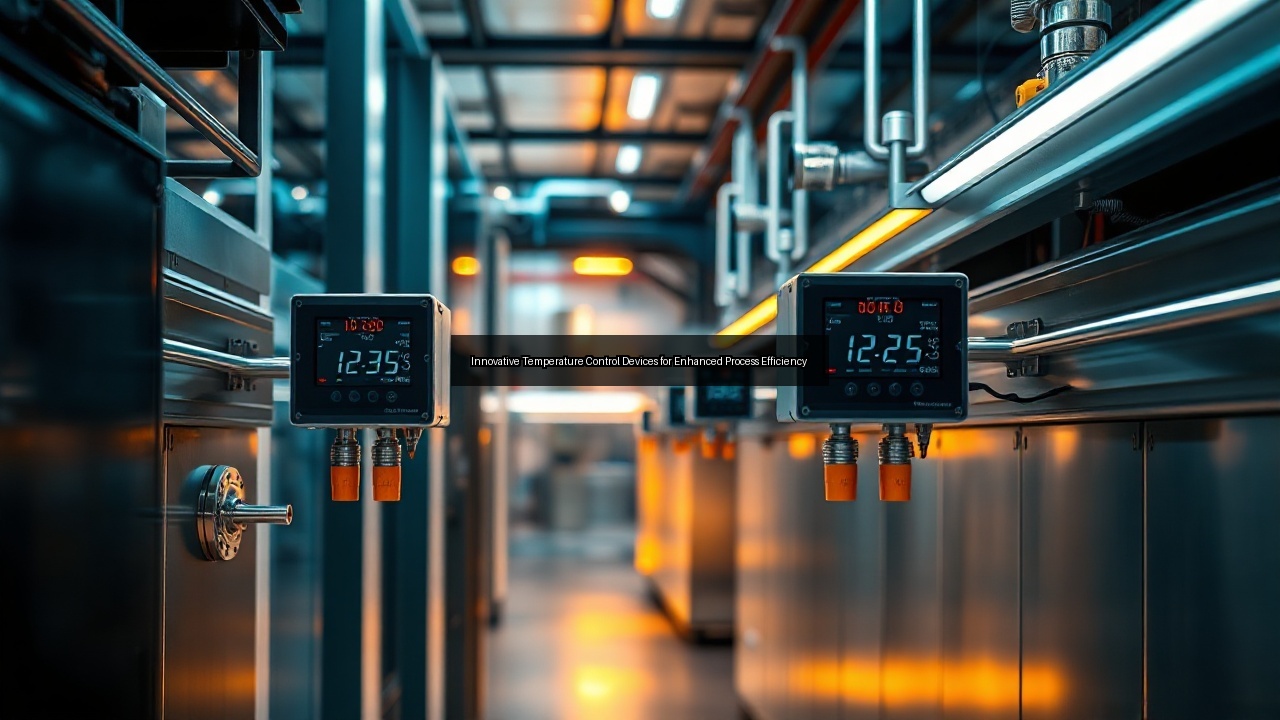
Understanding Innovative Temperature Control Technologies
The Role of PID Control in Temperature Management
PID control stands at the core of modern process temperature controller designs. Engineers rely on proportional integral derivative algorithms to compare measured temperature against a desired set value and adjust output power instantly. This approach eliminates overshoot while maintaining tight regulation across fluctuating loads. In heater control equipment, PID controllers deliver stable performance by fine-tuning the three gain parameters to match specific thermal masses. Users program these devices through intuitive interfaces that display real-time deviation and output percentage. Calibration routines verify sensor accuracy before production runs begin, ensuring consistent product quality. Many facilities integrate PID control with pressure sensors to monitor secondary variables that affect heat transfer rates. The result appears in reduced energy consumption and fewer rejected batches. Process engineers select PID controllers for applications ranging from extrusion lines to chemical reactors because the technology responds faster than simple on-off thermostats. Continuous tuning keeps systems optimized even when ambient conditions change.
Advancements in Thermocouple Technology
Thermocouple sensors provide reliable temperature measurement in demanding environments. Recent material improvements allow type K and type N thermocouples to withstand higher temperatures without drift. Thin-film constructions reduce response time, enabling faster feedback loops inside PID controllers. Manufacturers now coat junctions with protective layers that resist corrosion from process gases. Calibration certificates accompany each sensor batch, documenting accuracy at multiple points across the operating range. When paired with a process temperature controller, these thermocouples deliver precise data that supports automation strategies. Technicians route signals through shielded cables to minimize electrical noise near motors and drives. In high-vibration settings, mineral-insulated designs maintain integrity where standard probes fail. Infrared alternatives complement thermocouples when non-contact measurement becomes necessary on moving surfaces. Overall, these sensor upgrades raise the performance ceiling for industrial temperature controls across metal treatment, food processing, and semiconductor fabrication.
Overview of Infrared Temperature Measurement Techniques
Infrared temperature measurement offers non-contact solutions where physical sensors would interfere with the process. Modern pyrometers focus on specific wavelength bands to ignore emissivity variations from different materials. Operators set emissivity values directly on the process temperature controller to match surface properties. Advanced models include laser sighting for precise aiming and digital outputs for seamless data logging. When combined with PID control, infrared readings enable closed-loop regulation of moving webs or rotating drums. Calibration against blackbody standards confirms accuracy within one degree Celsius over wide spans. Facilities handling fragile products appreciate the absence of contact marks or contamination risks. Some controllers accept both infrared and thermocouple inputs, switching automatically based on production stage. This flexibility supports automation projects that demand rapid temperature profiling without stopping the line. Engineers evaluate spectral response and optical resolution before specifying infrared devices for each unique application.
Types of Process Temperature Controllers
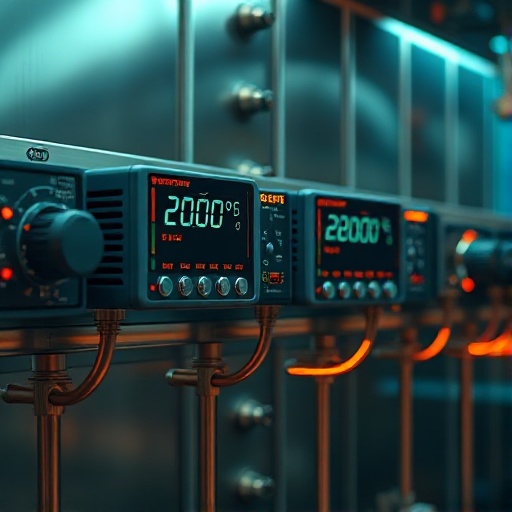
Panel-Mount Controllers: Features and Applications
Panel-mount controllers fit flush into control cabinet doors, providing clear displays and direct access to set points. These units often include configurable inputs and outputs that accept thermocouple, RTD, or analog signals. Operators program alarm thresholds and ramp-soak profiles through front-panel keys or PC software. In batch processing, panel-mount models compare measured temperature with the desired set value several times per second. Their robust construction withstands wash-down environments common in pharmaceutical plants. Many versions support 16 DIN or 32 DIN cutouts, matching legacy equipment footprints during upgrades. Integration with Modbus networks allows supervisory systems to monitor multiple units from a central station. The compact face leaves room for additional indicators on crowded panels. Process engineers choose these controllers when frequent operator interaction and visual status checks remain priorities. Their versatility extends to heater control equipment in ovens, furnaces, and molding machines.
DIN-Rail Controls: An Efficient Solution for Industrial Settings
DIN-rail controls snap onto standard mounting rails inside electrical enclosures, saving valuable panel space. These compact modules deliver full PID functionality without occupying door real estate. Wiring terminals face forward for quick installation and troubleshooting. DIN-rail models often feature 16 DIN or 32 DIN sizing equivalents in width, allowing dense packing of multiple loops. They accept RS-485 communications for daisy-chained networks that reduce cabling costs. Automation teams program these devices once, then rely on them for years of unattended operation. Built-in diagnostics flag sensor breaks or output failures before they affect production. When humidity control joins temperature regulation, some DIN-rail units add extra analog outputs to drive humidification valves. Their modular nature supports easy expansion when processes scale up. Industrial temperature controls mounted this way simplify maintenance because replacement requires no panel cutting or door modifications.
Surface-Mount Control Options: Versatility and Convenience
Surface-mount control options mount directly on machine frames or walls, bringing regulation close to the process. These devices withstand vibration and temperature extremes that would damage panel-mounted electronics. Flexible cabling options allow sensor placement at optimal thermal locations. Many surface-mount units include local displays plus remote PC-programmable controllers interfaces for initial setup. They prove ideal for retrofits where existing cabinets lack spare space. Configurable inputs let users switch between thermocouple types or add pressure transmitters without hardware changes. In food production lines, surface-mount temperature controls meet hygiene standards through sealed enclosures. Their placement near heaters shortens sensor lead lengths, improving measurement accuracy. Engineers appreciate the reduced wiring runs and faster response times these installations provide. Surface-mount solutions complement panel and DIN-rail styles when layout constraints demand creative placement.
Key Features and Specifications
Precision and Accuracy in Temperature Measurement
Precision defines how closely a process temperature controller maintains the target temperature under load changes. High-resolution analog-to-digital converters resolve temperature measurement to 0.1 degree increments. Accuracy specifications list maximum error after calibration, typically 0.25 percent of reading plus one digit. Regular recalibration against certified references keeps cumulative drift within acceptable limits. Sensor placement, lead resistance, and ambient temperature compensation all influence final accuracy. Advanced controllers apply linearization tables for each thermocouple type to eliminate nonlinearity errors. Users verify performance during commissioning by comparing controller readings against independent reference thermometers. In critical applications, redundant sensors feed dual inputs that the controller averages or selects based on deviation. This attention to detail reduces scrap rates and supports consistent product specifications across shifts.
Configurable Inputs and Outputs for Automation
Configurable inputs and outputs allow a single process temperature controller to adapt to many sensor types and actuator requirements. Universal inputs accept thermocouples, RTDs, voltage, or current signals without hardware jumpers. Digital outputs drive solid-state relays or contactors while analog outputs modulate valve positioners or variable frequency drives. Automation projects benefit when controllers expose these signals over industrial networks. Alarm outputs trigger lights or horns when temperature deviates beyond limits. Some models add digital inputs for remote set-point selection or run/hold commands. Engineers map these resources during commissioning to match process requirements exactly. The flexibility reduces spare-parts inventory because one controller model serves multiple machine types. Proper configuration also supports future expansion when new sensors or actuators enter the system.
Humidity Control Integration with Temperature Regulation
Humidity control integration extends process temperature controller capability into combined environmental regulation. Separate analog outputs modulate steam valves or ultrasonic humidifiers while the primary loop manages heating elements. Psychrometric calculations inside the controller convert temperature and humidity readings into dew-point values for precise control. Operators set independent set points for both variables through a shared interface. In drying ovens, coordinated control prevents surface cracking by balancing heat and moisture removal rates. Calibration of both sensors occurs through the same menu structure, streamlining maintenance. RS-485 links transmit combined data to plant historians for quality documentation. This integrated approach eliminates separate thermostats and humidistats, reducing panel clutter and wiring complexity. Facilities handling pharmaceuticals, textiles, and electronics gain tighter process windows and improved yield.
Communication Protocols and Connectivity
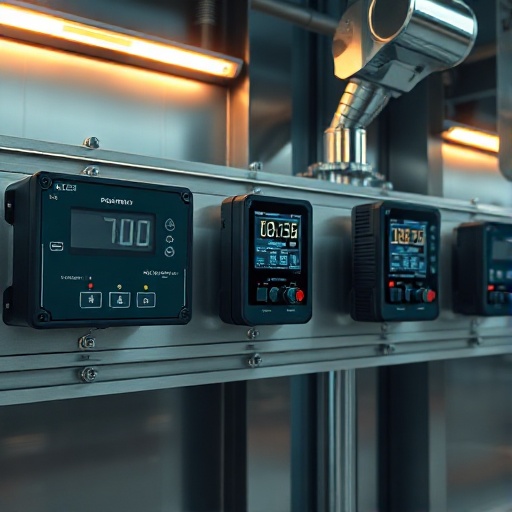
RS-485 and Modbus for Enhanced Data Sharing
RS-485 and Modbus protocols enable reliable data sharing across multiple process temperature controller units. The half-duplex RS-485 physical layer supports distances up to 1200 meters with simple twisted-pair wiring. Modbus RTU remains the dominant protocol because of its simplicity and broad device compatibility. Master devices poll each controller for temperature, output percentage, and alarm status at regular intervals. Engineers configure node addresses through front-panel menus or PC software before network startup. Diagnostic tools monitor communication errors and retransmission counts to verify link health. When combined with PID control, network access allows remote tuning and set-point changes without opening enclosures. Data logging software archives trends that reveal gradual sensor drift or heater degradation. This connectivity transforms isolated controllers into elements of a coordinated automation strategy that improves overall equipment effectiveness.
PC-Programmable Controllers: Customizing Process Controls
PC-programmable controllers accelerate setup and customization of complex temperature profiles. Software packages display graphical ramp-soak sequences that operators drag and drop into place. Users download configurations to individual units or broadcast identical settings across an entire production line. Password protection prevents unauthorized changes once the process temperature controller operates in production. Simulation modes let engineers test logic before live equipment starts. Firmware updates arrive through the same connection, adding features without hardware replacement. Technicians archive parameter files for each machine, enabling rapid restoration after controller swaps. The approach reduces commissioning time compared with manual keypad entry. PC-based tools also generate reports that document calibration values and communication settings for regulatory compliance. Manufacturers continue expanding these utilities to support emerging requirements in data analytics and predictive maintenance.
Choosing the Right Process Temperature Controller
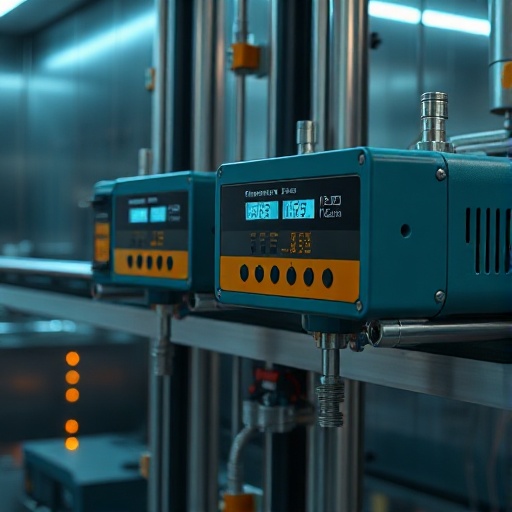
Comparing PID Controller Options for Specific Applications
Comparing PID controller options begins with matching control algorithm sophistication to process dynamics. Simple on-off thermostats suffice for large thermal masses with loose tolerances, while full PID controllers handle fast-response systems with minimal overshoot. Dual-loop models regulate both temperature and humidity or pressure simultaneously. Input type compatibility, output amperage ratings, and display size further narrow choices. Review application notes from manufacturers to see performance graphs under representative load conditions. Field trials on the actual equipment confirm that theoretical tuning parameters translate into stable operation. Cost differences often reflect build quality, warranty length, and available communication options rather than core regulation performance. Selecting the right variant avoids both underperformance and unnecessary expense.
Factors to Consider: Calibration and Set Value Comparison
Calibration and set value comparison determine long-term reliability of any process temperature controller. Factory calibration certificates provide initial accuracy benchmarks, yet field recalibration accounts for sensor aging and installation effects. Schedule verification intervals based on process criticality and historical drift rates. Controllers that display both measured temperature and active set value side by side simplify daily checks by operators. Deviation alarms catch excursions before product quality suffers. Some units store multiple set values and switch between them through digital inputs or network commands. Documenting calibration results supports traceability requirements in regulated industries. Consistent comparison between actual and target temperatures remains the fundamental task these devices perform, directly affecting throughput and energy efficiency.
Mounting Styles: Selecting the Right Temperature Control Solution
Mounting styles influence installation cost, maintenance access, and environmental protection. Panel-mount controllers offer prominent displays but require cutouts and bezel sealing. DIN-rail controls pack densely inside cabinets yet may need separate indicators for operator visibility. Surface-mount options place regulation near the heat source, shortening sensor runs and improving response. Evaluate vibration, temperature, and wash-down requirements before finalizing style. Hybrid installations combine styles across different zones of the same machine. Always verify that chosen mounting hardware matches available space and wiring practices. The correct selection ensures the process temperature controller delivers its designed precision and accuracy throughout its service life while supporting future automation expansions.
See Also
- Understanding PID Controllers for Effective Process Temperature Management
- A Guide to RS-485 and Modbus in Process Temperature Control Systems
- Infrared Temperature Measurement Solutions for Real-Time Monitoring
- Maximizing Precision with Advanced Process Temperature Controllers
- Exploring the Role of Thermocouples in Accurate Temperature Measurement